First curated and created on the ground by Bethany Walker – Linkedin | Feb 2026
TLDR: When we planned our Central America trip, I was fortunate enough to get a lot of tips from my brother, who’d just done it a year earlier. If it wasn’t for him banging on about Guatemala, I might not have gone. I’d pretty much never heard of the country before, and had no idea what to expect. Maybe that’s why I was so blown away.
Friendly people. Incredible and diverse landscapes. Cheap food, cheap accommodation, and so many things to do. Guatemala is a must-visit. Here’s how to see the best of what this incredible country offers, in my 3 week Guatemala itinerary.
Jump to: The Itinerary | What to Pack | Safety | Budget | Getting around | Best stays
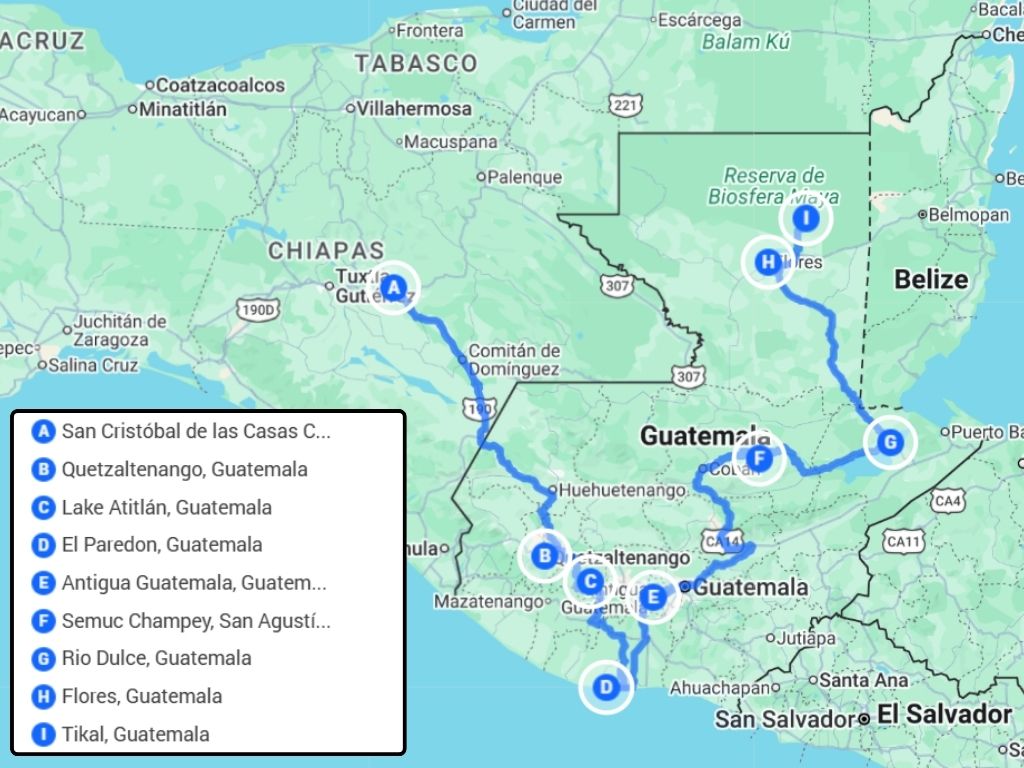
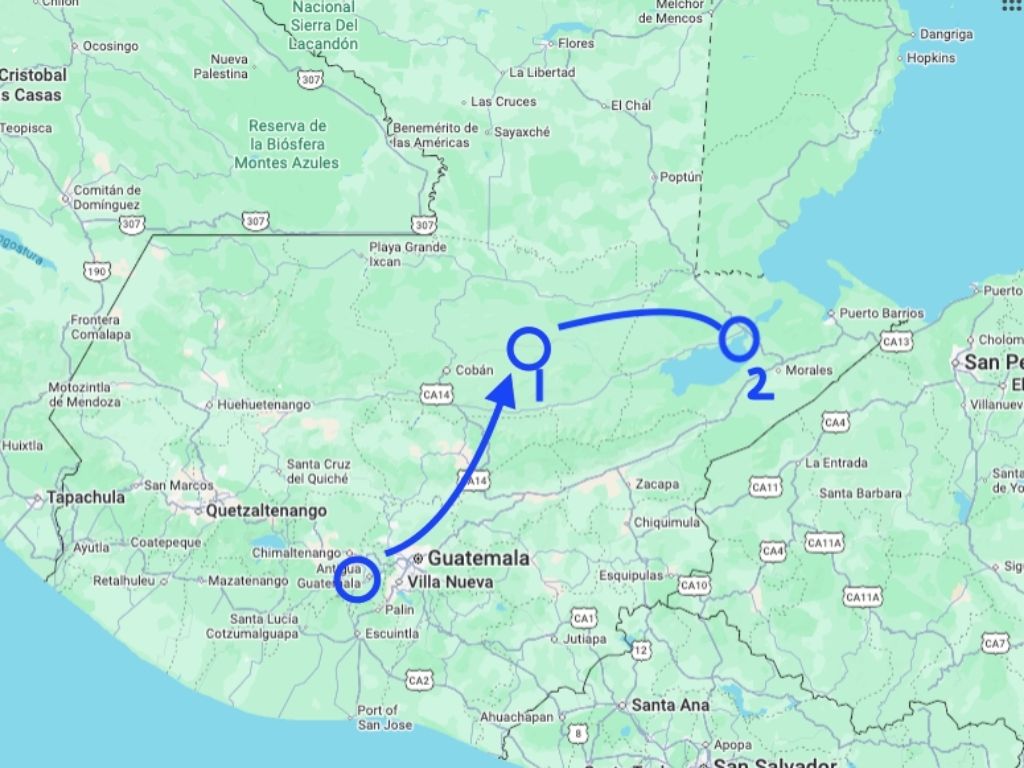
Route at a glance: Lake Atitlán > Panajachel > San Pedro La Laguna > San Marcos & San Pedro > Antigua > El Paredon > Semuc Champey > Rio Dulce & Livingston > Flores & Tikal
What to know before you go

Ave temp
23°C (73°F) Dec – Feb
27°C (84°F) March – April

Languages spoken
Spanish MostlyLimited English

Money needed
Guatemala Quetzal (G). (Pack some USD also)

Visa info
90-day visa-free for UK,
US, CAN, AUS & NZ
When’s the best time to visit Guatemala
Like most Central American countries, Guatemala has a dry season and a wet season. You’re going to want to visit in the dry. This runs from November to April. We travelled in November – December and had perfect weather the whole time (apart from the day of the Acatenango hike, which is typical).
Language & currency
Spanish is the main language, with 93% of the country speaking it. Some Guatemalans speak English, but mainly in the tourist and larger towns, so it will help you to know basic Spanish.
There are also 22 ancient Mayan languages spoken in Guatemala, so once you get into the more remote villages, like Semuc Champney, though, you’ll hear indigenous languages like Q’eqchi’.
The currency is the Guatemalan Quetzal (it’s one of the few countries that don’t use pesos!).
What is transport like in Guatemala
Coming from Mexico with its luxurious ADO buses, this was a shock. The transport in Guatemala is a little more… back to basics. Think minibus with no AC.
The roads are also fewer and farther between. You might find yourself travelling past B to get to C, then coming back on yourself to visit B. Even with a well-planned itinerary, it’s a bit unavoidable.
Is 3 weeks in Guatemala enough/too long?
We spent 3 weeks travelling in Guatemala, all by land. It didn’t feel rushed, and if anything, we probably could have squeezed in one more spot. So, the itinerary below is a lazy route to Guatemala. Feel free to add on the extras.
What to pack for Guatemala
Do not play around with your packing list for Guatemala! The climate variety in this country is crazy. Hot-like-the-sun beaches like El Paredon, balmy, misty jungle in Semuc Champey, cool altitude cities like Antigua, and of course, the volcano where you’ll freeze your bits off.
If you’re doing the volcano hike, you’ll need:
- Comfortable walking shoes (there was a girl in my group with platform Dr Martens on, not the best idea).
- Lots. Of. Layers. Not just a warm coat, but base layers, a fleece, a hat, and gloves; it gets colder the higher up you go, so you need to keep adding on.
- A good backpack to carry all your gear in.
- A rain jacket, just in case.
Plus other travel essentials:
- DEET bug spray! Guatemala is low risk for Malaria but high risk for Dengue Fever, so you need to protect yourself.
- Lots of sun cream.
- Modest clothing if you’re going to be visiting religious sites.
- Something warmer if you’re visiting Antigua and Lake Atitlan, as these do get a little chilly in the mornings/evenings.

Travel Safety in Guatemala
The only place we ever felt a little unsafe was in Guatemala City. Many backpackers skip the capital for that exact reason. On the whole, though, the people are very friendly and helpful. But always check government guidance for foreign travel advice. And, like usual, use common sense and keep your valuables close.
For up-to-date travel safety warnings in the main remaining area of less stability, check out the UK’s Foreign and Commonwealth Office travel advice site covering Guatemala: Official Guatemala Travel Safety Advice
Getting to/around Guatemala
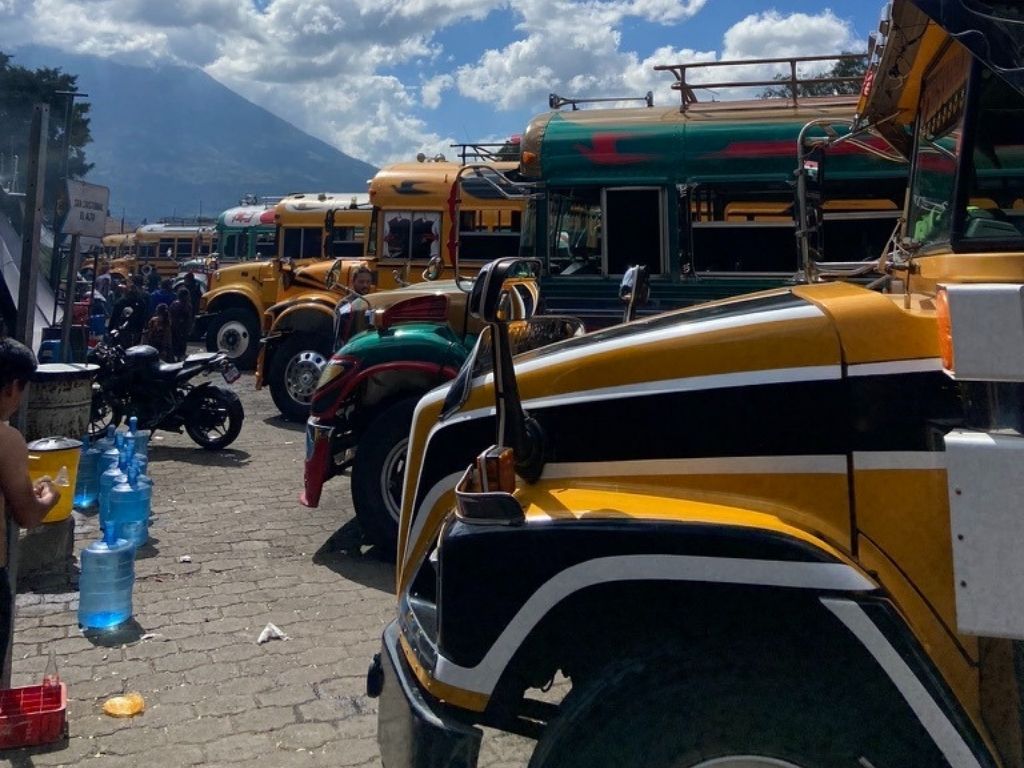
Heard of the Chicken Bus? Well, even if you haven’t, you will certainly know about them by the end of your trip. Here’s my take on getting around Guatemala when exploring.
By shuttle/bus
Call me a flashpacker, but we travelled entirely by tourist shuttle around Guatemala. Some minivans were more… modern than others, but on the whole, it was mostly semi-comfortable and still very affordable. Lake Atitlan to Antigua is around 2.5-3 hours, and that costs about $20-$25, so that gives you a good idea of the price.
If you do want a more authentic (/thrilling) experience, you can also travel by chicken bus. This is pretty unique to Guatemala (and Nicaragua), so you might decide you want to tick it off. The chicken buses are old American school buses that have been repurposed and pimped up. Picture overcrowded seats, loud music, loads of locals, and the odd chicken or two. The driving can get pretty hairy, but for the same Lake Atitlan to Antigua journey, you can expect to pay $6-$10.
By plane
Partly because we were on a budget, partly because we didn’t need to, we didn’t travel by plane the whole time. Guatemala isn’t that big of a country, and travelling by bus/shuttle got us everywhere we needed to go, with plenty of time left to enjoy our trip.
Ride apps
Ride apps aren’t widespread in Guatemala, apart from in Guatemala City, where I’d definitely recommend relying on Uber and not local taxis (for safety reasons).
Visa information
Most visitors will automatically get a 90-day CA-4 visa on arrival in Guatemala. This includes visitors from the USA, Canada, the UK, and the EU. You do not need to do anything in advance, just make sure you have at least 6 months’ validity on your passport.
Border crossing
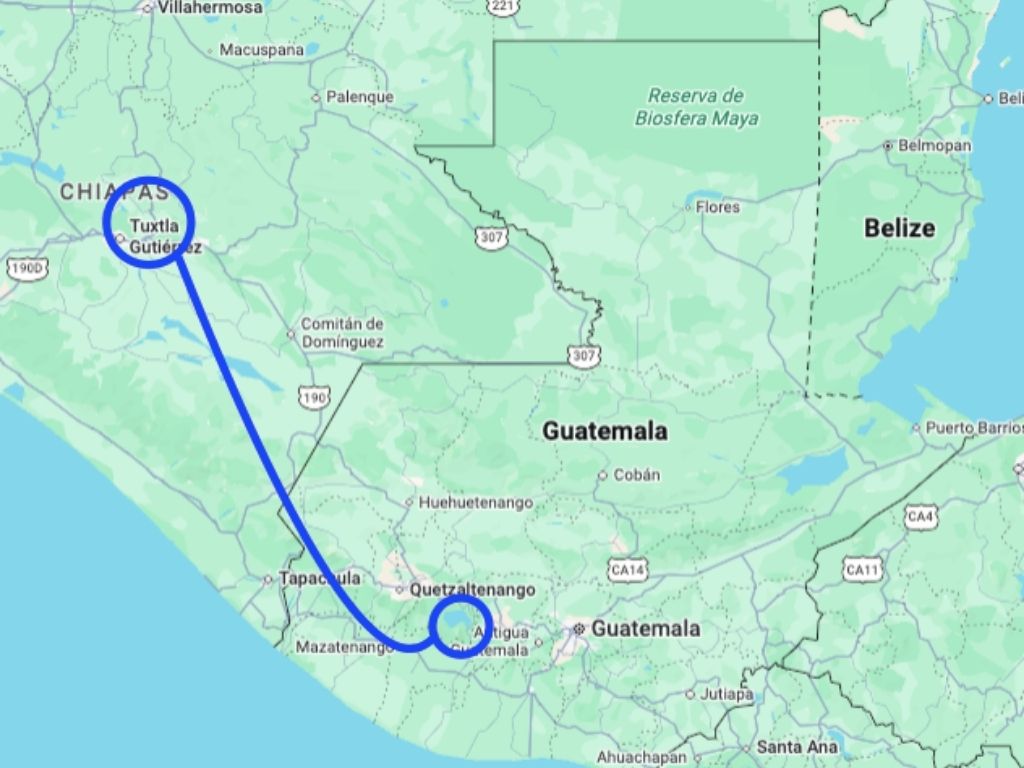
We crossed into Guatemala via the Mexico border. It was a long day, but relatively pain-free. We chose the San Cristobal (Mexico) to Lake Atitlan route. This was a little while ago now, so I would keep an eye on safety recommendations, as the state of Chiapas has recently moved into the ‘advise against all but essential travel’ list.
Just a couple of things to note:
- You need to get a stamp when you arrive. If they don’t stamp your passport on arrival, you might get a fine when you try to leave. It will also most likely cause you a headache and delays when you cross your next border.
- There is no official ‘entry tax’ for Guatemala. Though they might try to charge you one. If they do, they’ll probably ask for around $30. You can try asking them for an official receipt, and sometimes this will deter them. Or you can suck up and just pay.
- Anyone who’s already done a land border crossing will know: you need to keep your wits about you. There are often people offering help who don’t really mean it.
Introducing the Guatemala route
DISCLAIMER: This post might have links to travel services and products that we enjoy. We might make a commission from it at no extra cost to you.
Best for: Backpackers, Solo Travellers & Adventure Seekers
This route gives you a bit of everything Guatemala has to offer. Lakes, volcanoes, towns, beach, jungle, you couldn’t really cram that much more in if you tried. Unless you have more than a few weeks. In which case, there are a few optional extras.
This route is great for backpackers, solo travellers, people who love adventure, but also those who love to chill. None of the locations are really ‘party places’. In fact, I think we only had one or two big nights in Guatemala. But I’m in my third decade now, so I am an ancient relic in the backpacking crowd.
The caveats
Before I get stuck in, a note to say that this 3 weej Guatemala itinerary is based on travelling by land, entering from Mexico. If you’re doing South to North, you’re going to want to switch things around.
You’ll also find that it’s a bit of a funny country to travel in, as you might feel like you’re going back and forth a lot. Probably, because you are. The roads aren’t great in Guatemala, so you do have to repeat yourself a little bit.
Some places are far out of the way and can’t really be worked into an actual circular route, so they just have to be added on. El Paredon is an example of this. We wanted to go from Lake Atitlan to El Paredon, but the bus actually went via Antigua anyway. So we drove through to get there, then drove back up to Antigua after a few days in El Paredon.
THE Itinerary: 3 Weeks in Guatemala
This route is perfect for anyone travelling to Guatemala via Mexico. If you’re coming from Belize, you can just flip the order around.
It offers you a great taste of the variety of this country, including jungles, rivers, beaches, volcanoes, lakes, and cities.
First up – the South.
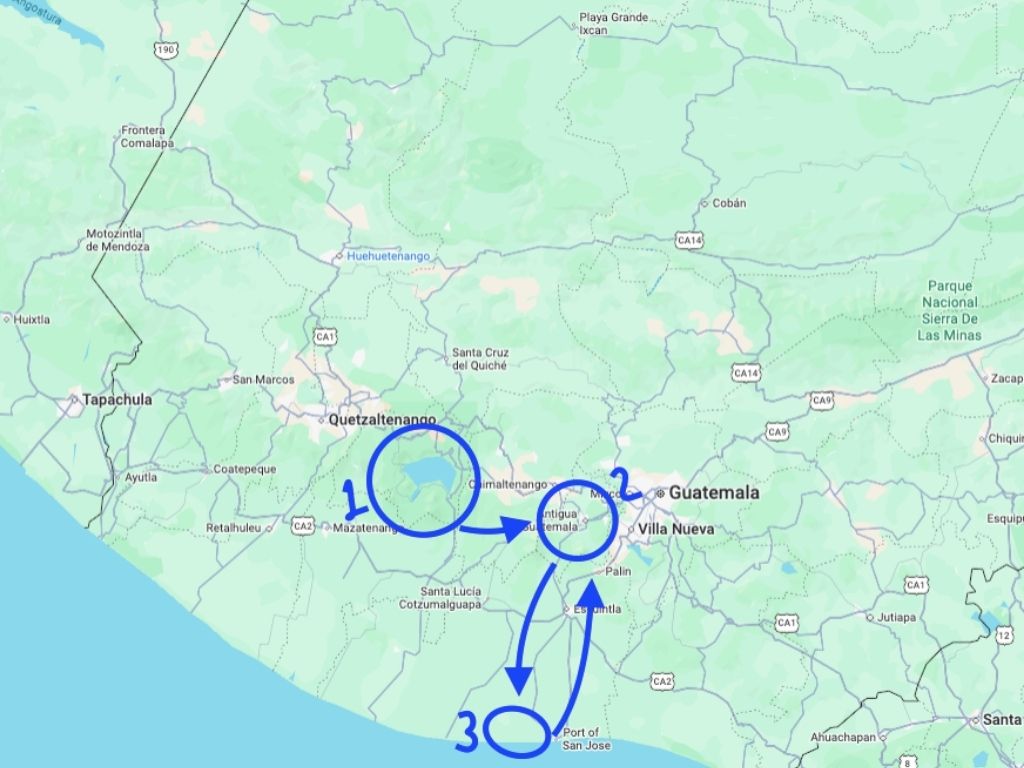
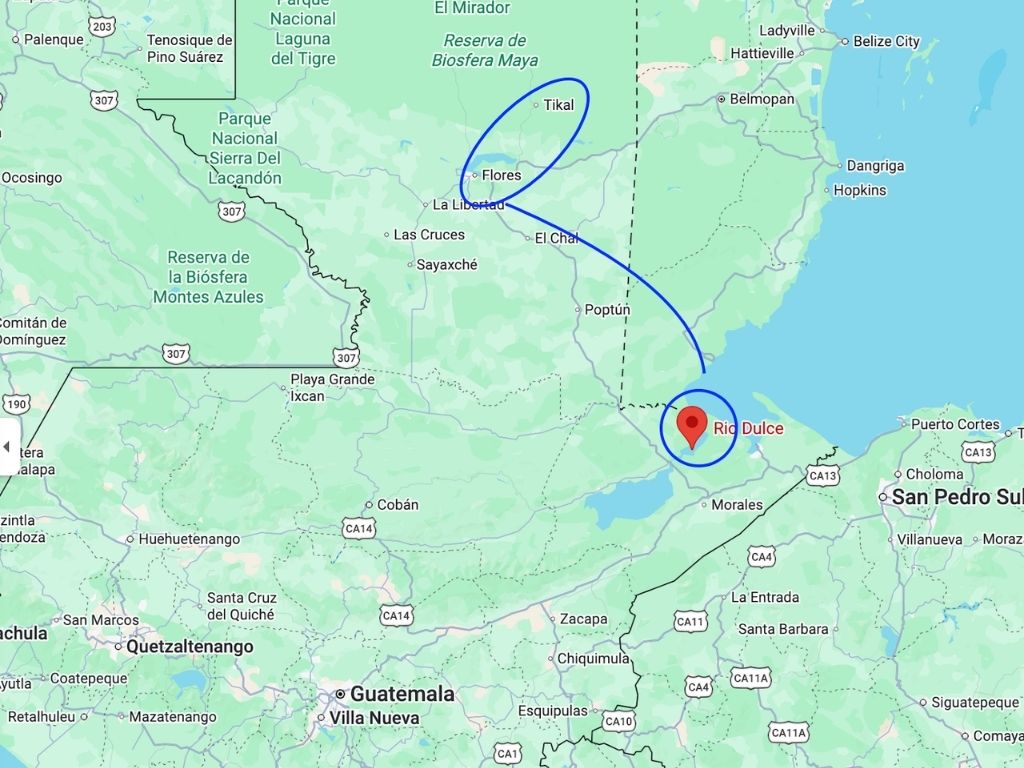
The Route in brief: Lake Atitlán > Panajachel > San Pedro La Laguna > San Marcos & San Pedro > Antigua > El Paredon > Semuc Champey > Rio Dulce & Livingston > Flores & Tikal
Part 1: South/The Pacific Coast
If you’re entering from the Chiapas area of Mexico, it makes sense to do this corner of Guatemala first.
It’s going to be a long journey into Lake Atitlan across the border (maps say it’s a 9-hour drive, but we travellers know 9 hours really means 14+), but once you get to the lake, your next few places are pretty close.
Lake Atitlán – 5 days
Panajachel (1 day)
Lake Atitlan is your first logical stop. And after that border crossing, you’re going to need it.
There are several major villages dotted around the Lake. Each has their own style/character, and it’s definitely worth seeing a few. We started in Panajachel, just because that’s where the bus ended.
Panajachel is the busiest town around the lake; there are loads of hostels, hotels, restaurants and cafes. It doesn’t really have that ‘backpacker’ vibe, though, which might be a good or bad thing depending on what you’re looking for.
We only spent one night and one day here, arriving late from the bus and leaving the following afternoon. The Little Spoon cafe was my highlight spot.
San Pedro la Laguna (2-3 days)
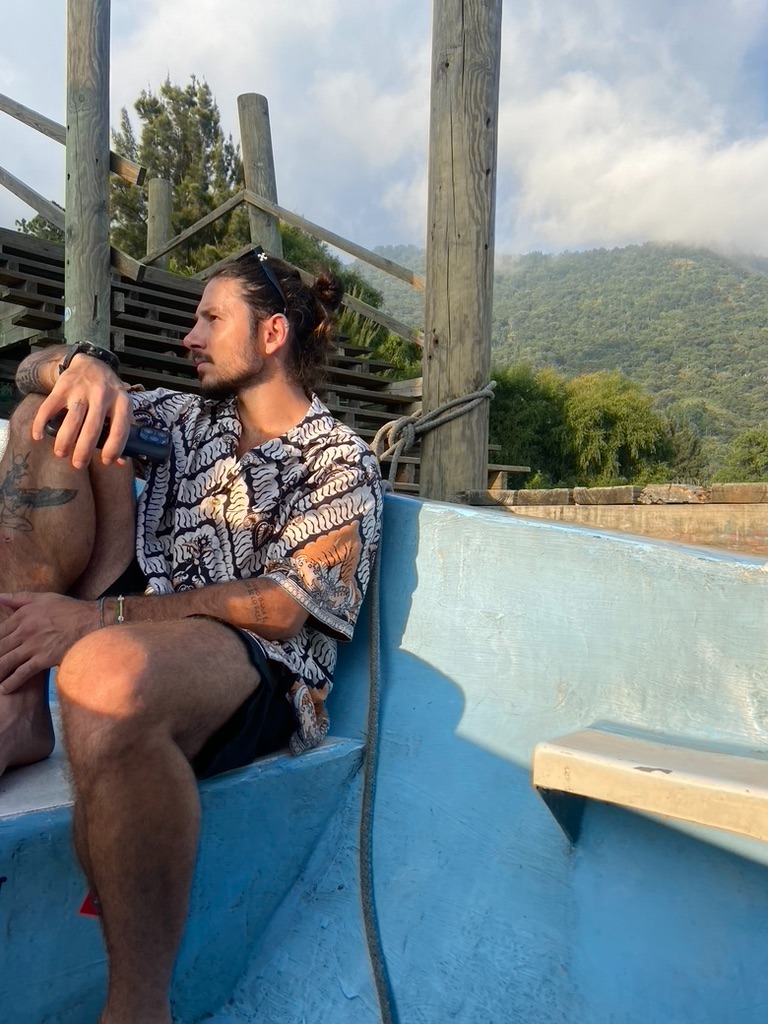
San Pedro La Laguna was our next stop. This is on the south-western shore of the lake. Getting across the lake is super easy, and actually a really nice activity to do, whether you actually want to go to the next town or just enjoy the ride. You can catch a lancha (boat) from the jetty to the next town for around $2-$4.
San Pedro la Laguna is probably the partiest town around the lake, but it’s still pretty tame in comparison to other places we’ve seen on our travels.
There’s a good variety of accommodation. We stayed in one of the most budget-friendly places of our whole travels, Gran Colibri. So budget-friendly that it nearly caused a breakup.
Emergency shelter tents that had been just about converted into cabins, cold outdoor showers, cockerels keeping you awake at all hours of the night, and more creepy crawlies than you could count. But it worked out to around $5 per night.
TIP: We then walked to Sababa Resort each morning, paid for the all-you-can-eat breakfast (which was to die for) and spent a few hours by the pool soaking up the sun, wishing we’d forked out and stayed there instead. It’s about $40 per night, though, and that’s for a dorm, not a private room.
Things to do
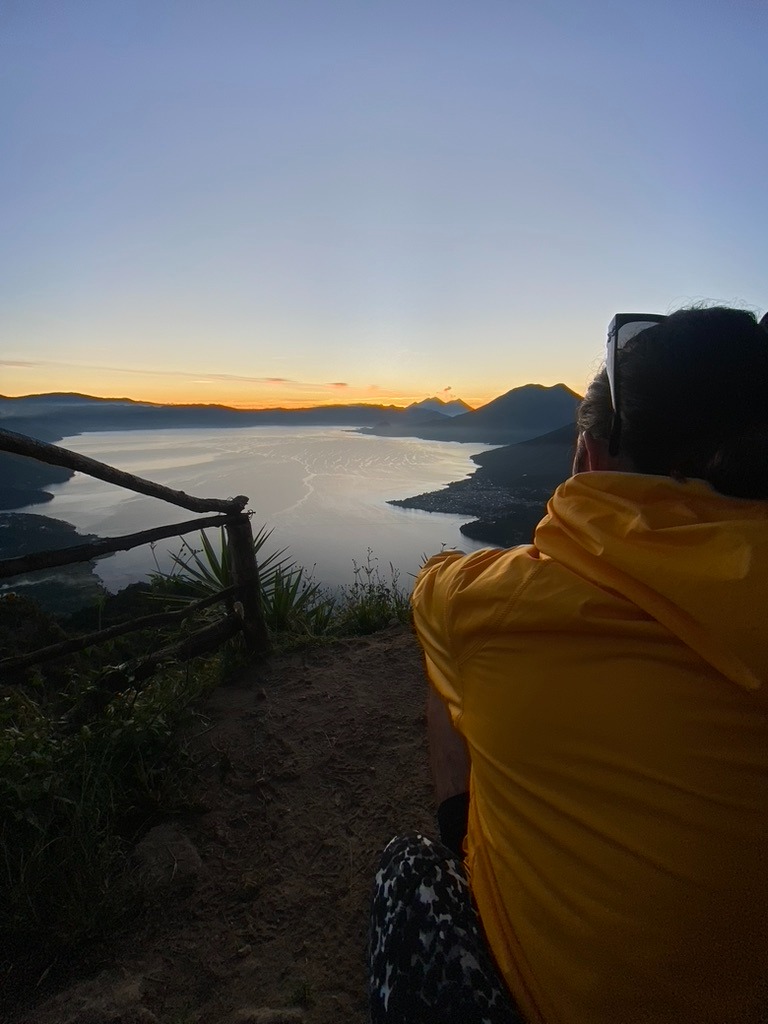
- Indian Nose Hike: The one thing you cannot miss in Lake Atitlan. You wake up at the crack of dawn, get transported to the base of the hike, get given a headtorch, and trudge your way up a little mountain in the pitch black to be rewarded with an incredible sunrise. Apart from the unstable ground, the hike is not too difficult. It’s a great warm-up for Acatenango. Just make sure you use the toilet before you go. You don’t want to see what’s up there.
- Kayaking: A kayak will cost you around $8 per hour. It’s a great way to see more of the lake, and it’s easy to hire them from any jetty near the lake.
- Swimming: A hot topic of debate amongst backpackers in the area! You can swim in the lake, you just need to be careful where and at what time of year. There’s a lot of runoff from the towns, so try to visit somewhere more rural for a dip.
- Eating: San Pedro packs a big punch for a small town. There’s a good mix of local and Mediterranean food. Sababa Restaurant (yes, same as the hotel) is great for brunch. Pita Sabij is also a good option, with lots of Mediterranean and Israeli food.
- Tattoo: One of my favourite artists I’ve found on my travels, Bams does amazing tattoos and often has a queue out the door.

San Marcos & San Juan (2-3 days)
There are a couple more towns that are worth visiting, too.
San Marcos is a bit more upmarket, full of Yogis and wellness types. There are loads of yoga retreats, wellness centres, vegan restaurants, and Reiki treatments. You name it. Kawoq Forest deserves a special mention; they’ve got an à la carte menu of treatments, healing services, and vegetarian food, as well as extended courses/stays.
San Juan La Laguna is more art and culture, full of local creators and traditional food. Here you can do coffee tours, visit women’s cooperatives to watch traditional weaving, and wander the streets admiring the murals.
Antigua – 5 days
The main reason everyone goes to Antigua is because of the volcano. However, it is 100% worth a trip even if you don’t plan on doing the hike.
It’s a really colonial city, full of history, lovely buildings, great places to shop and eat, and it’s surrounded by volcanoes on all sides. You can’t really take a bad picture of this place.
TIP: The city is at 1500 metres above sea level, so you might need a couple of days to adjust. It’s a good idea to bear this in mind when deciding what day to do your hike, as you want time for your body to acclimatise before you start trekking higher properly.
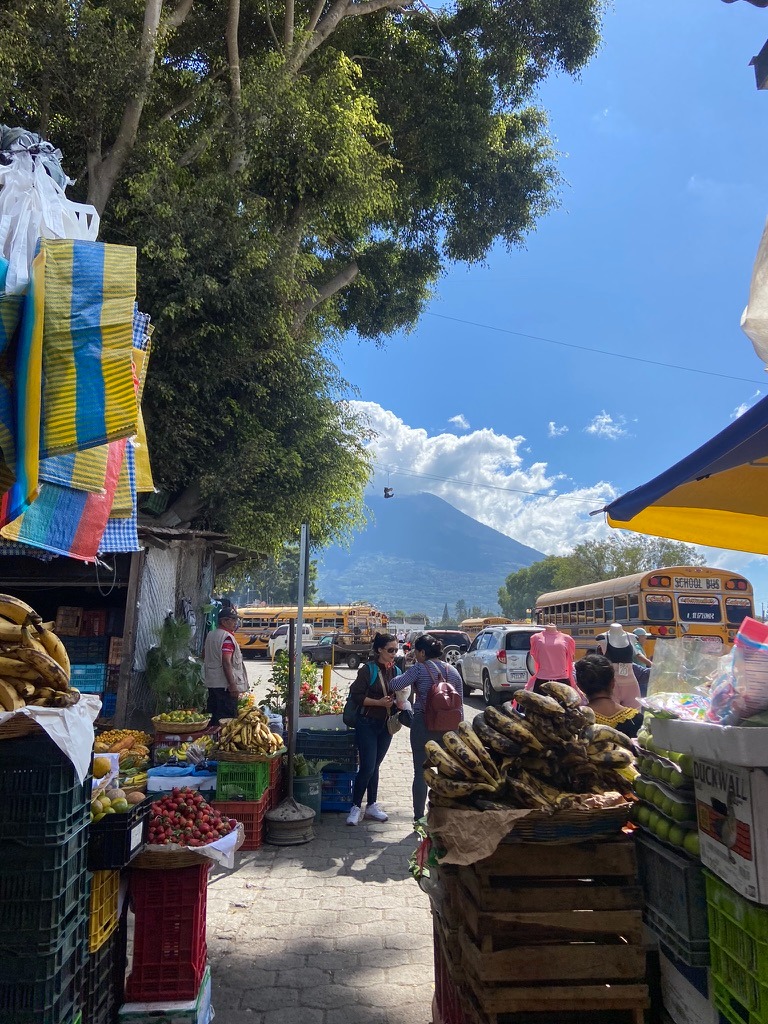
Things to do in Antigua:
- Walking tour: Walking tours are by far one of my favourite backpacking activities. You learn so much about the city that you otherwise never would have known. The guides will often take you to their favourite food spots, so it’s a decent way to try proper, local food too. You can book these super easily via Get Your Guide.
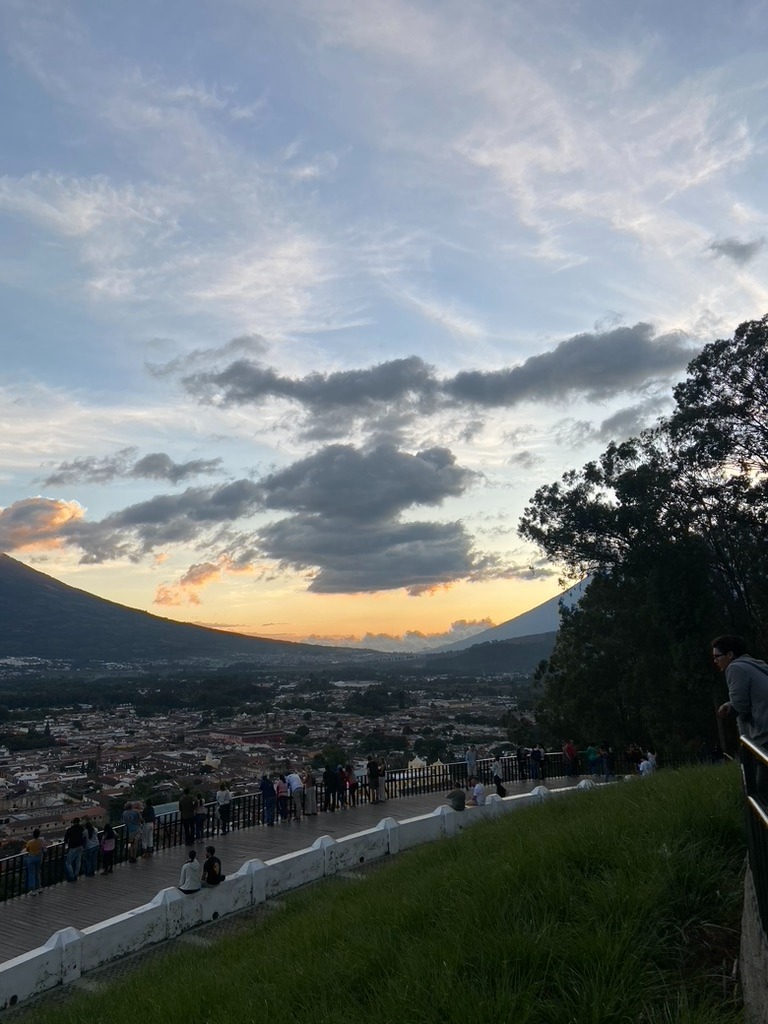
- Cerro de la Cruz (Hill of the Cross): A lovely viewpoint that overlooks the city. It’s a great spot to watch the sunset and is full of travellers and locals alike. The hike itself is only about 20 minutes up a well-maintained, stone path.
- The thrift clothes market: This one is definitely a hidden gem. You’ll need the map’s pin as there’s no chance you’ll just stumble past it. Piles and piles of vintage clothing stacked up on tables with absolutely no organisation to it. Dig through, and you can find everything from Dickies and Carhartt to Levi’s and one-off gems.
The Acatenango hike
The hike is the thing to do in Antigua, so it’s getting its own section.
We did ours through Tropicana Hostel. There was a group of about 25 of us, with 3 guides. The hostel provided breakfast in the morning, as well as lunch, dinner at the volcano, and breakfast the next day. All that for around $90.
The hike is pretty hard. It’s a solid 6 hours up, depending on fitness levels, and it’s steep the whole time with uneven ground throughout. The guides do stop frequently, but you need to have a decent level of fitness to complete it.
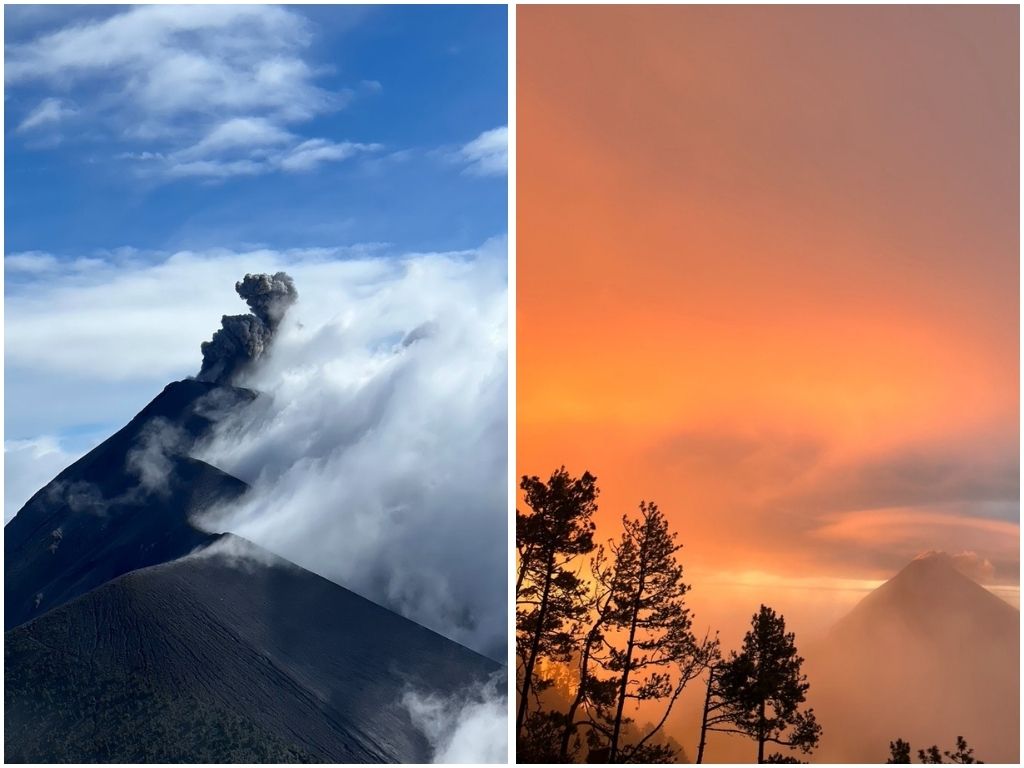
Once you get to base camp (which is on Acatenango), you have the option to hike over to Fuego to be on the active volcano. I did not do this; my partner did. And after seeing how shellshocked he was when he got back, I was glad I hadn’t. The view was actually better from where I was, as there was so much mist on Fuego.
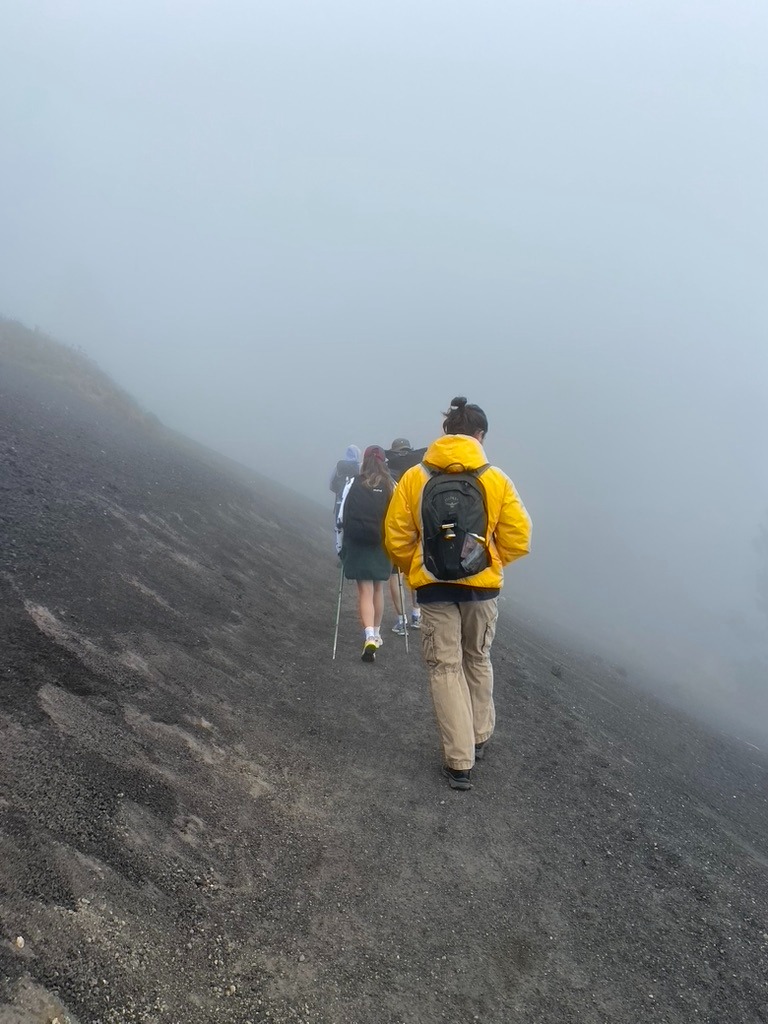
You sleep on the volcano overnight. The guides make you hot chocolate, and you roast marshmallows, which is lovely, but the temperature overnight is usually around 2-5°C. And the sleeping bags they provide aren’t exactly state-of-the-art. So be prepared for a sleepless night.
The next morning, you have the option to wake up even earlier and hike to the summit of Acatenango to watch the sunrise. We both did this part, with only about 6 others from our group joining us. This is definitely the sketchiest part, as it’s still pitch black and the terrain is extremely steep and uneven. Typically, by the time we got to the top, we couldn’t really see the sunrise because of the clouds. The people at base camp showed us some great pictures, though…
The hike down is also pretty tough, partly on the knees and also because the ground is so slippery. Be prepared to fall over at least once.
Overall, even though it was freezing, really hard, and there was no sunrise, it was still an incredible experience and definitely one to tick off.
Accommodation:
- Cheap: Tropicana Hostel is the place to stay for backpackers. It does get very booked in advance, though, so make sure you plan ahead. $14 per night for a 14-bed mixed dorm.
- Mid: We stayed in an Airbnb, which had about 3 rooms, but it was pretty much only us there the whole week. An average Airbnb will be about $40-$50.
- Luxury: You can stay in a 4* hotel for around $70 per night.
El Paredon – 3 Days
After that hike, some recovery time is in order. El Paredon is a great place to do that.
It’s still finding its place on the map. It’s semi-popular with backpackers, but only those who’ve been told by someone else to visit. It’s a small, wild, volcanic beach town on the Pacific coast with about 5 hostels and not much else… apart from one once-in-a-lifetime activity.
Things to do:
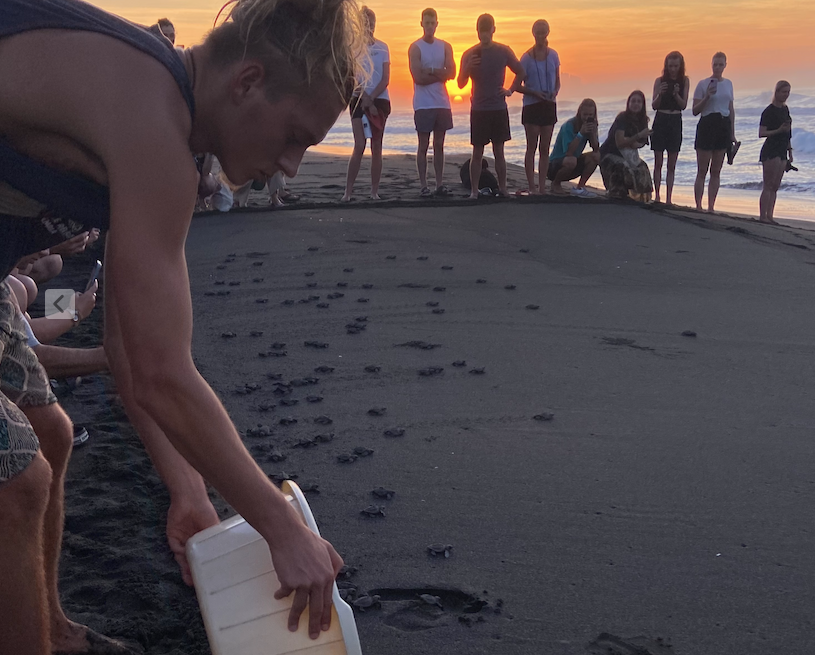
Turtle release
Turtle releases get a mixed rep. I have done one in Mexico, which felt more like a conveyor belt than a magical experience. But the El Paredon one is the opposite.
It’s at sunrise, the setting’s instance, and you’re not allowed ‘your own’ turtle, or to touch them. The guides make you stand behind a line, and they release the turtles themselves; you just watch them waddle to the sea.
Plus, it’s free! Donation only.
Hostel chilling
I’m usually the out-and-about backpacker, not the chill at the hostel type, but El Paredon forces you to do that, which was a nice change.
We stayed at Mellow Hostel, which had great activities. I don’t mean just beer pong. Real variety. Quiz nights, litter picking on the beach, pool volleyball tournaments, we even played wink murder one night.
There’s also the usual hostel thing where each spot has ‘their night’ to throw a party, so it can get lively if you want it to.
Our favourite places to stay in Guatemala ❤️
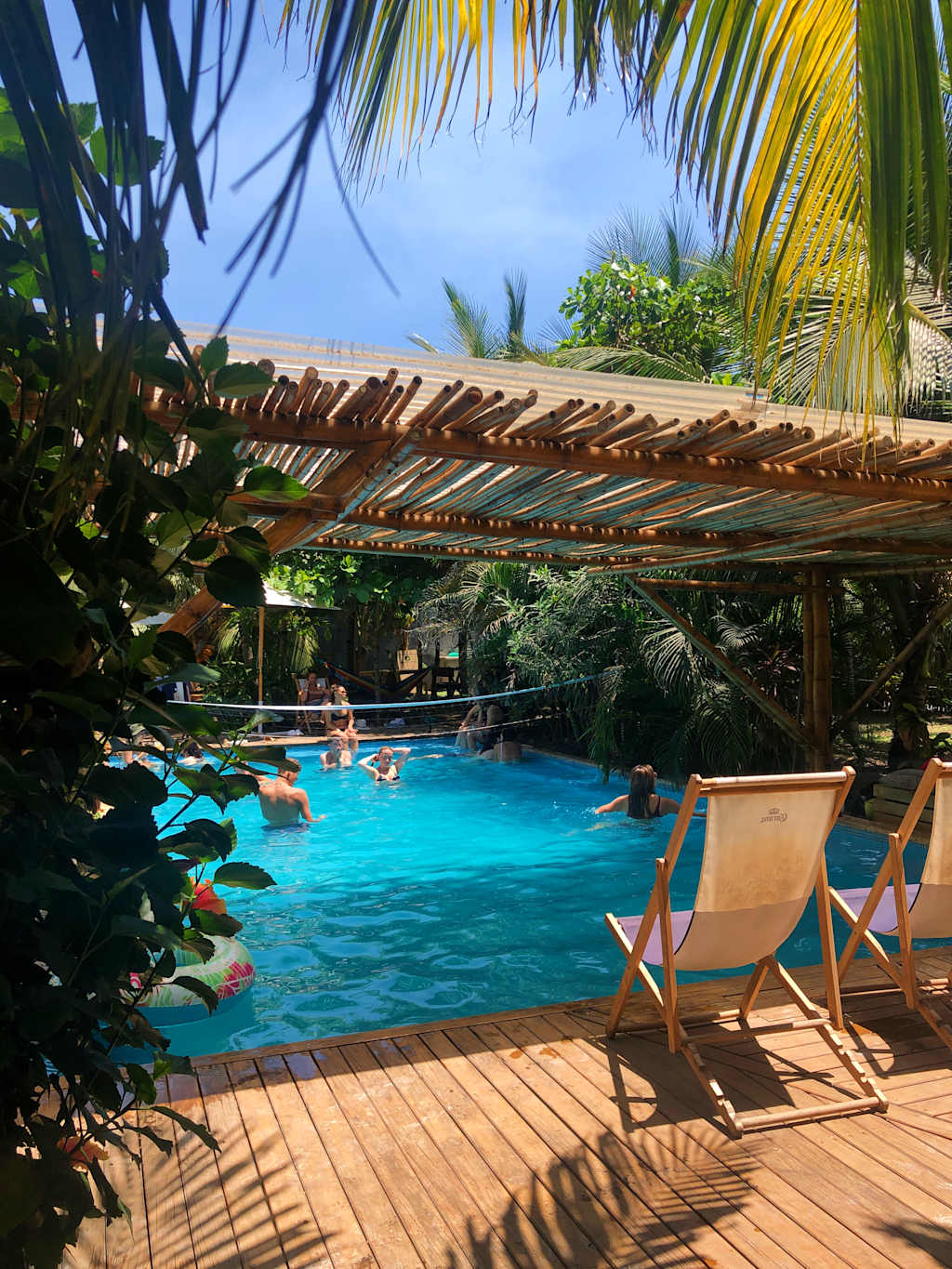
Mellow Hostel Paredon
📍 Hostel, El Paredon
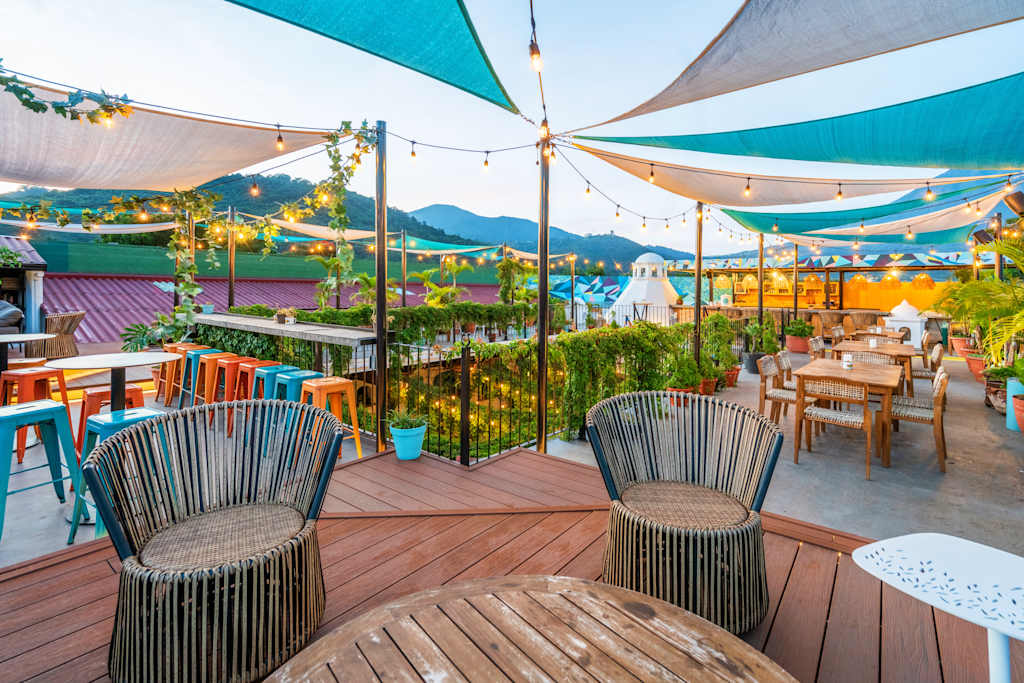
The Adra Hostel
📍 Hostel, Antigua
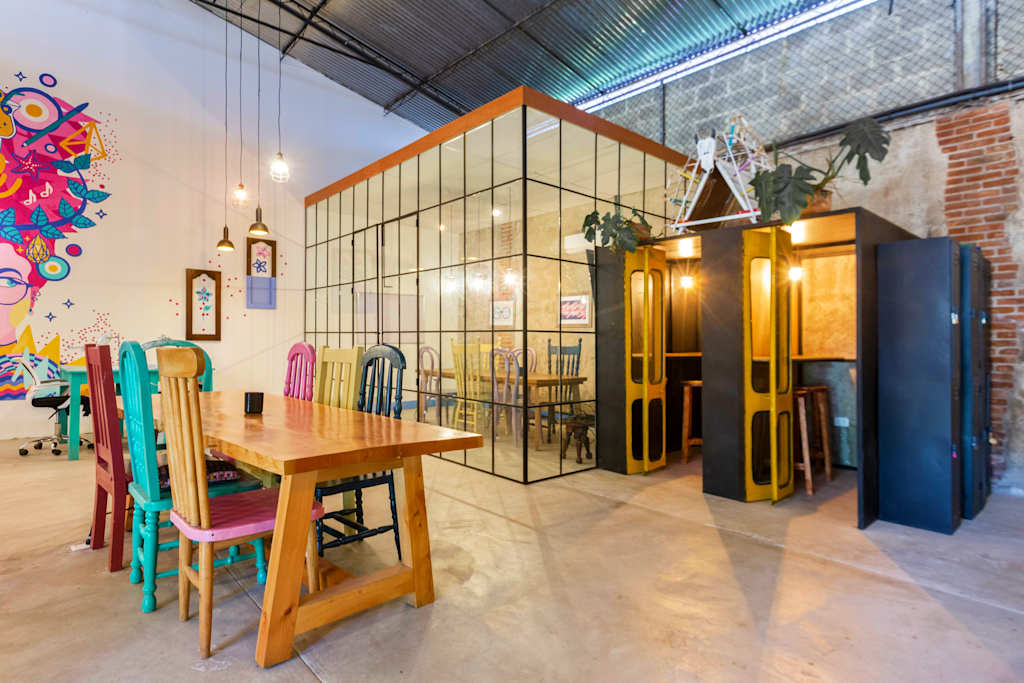
The Socialtel
📍 Co-Living, Antigua
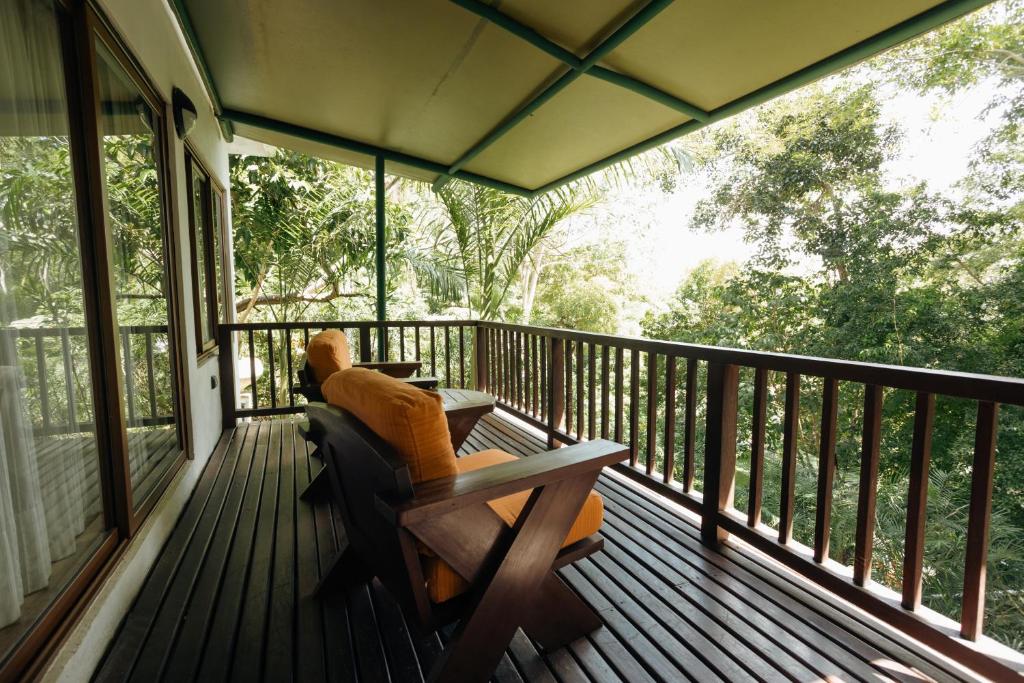
Bolontiku Boutique Hotel
📍 Hotel, Flores
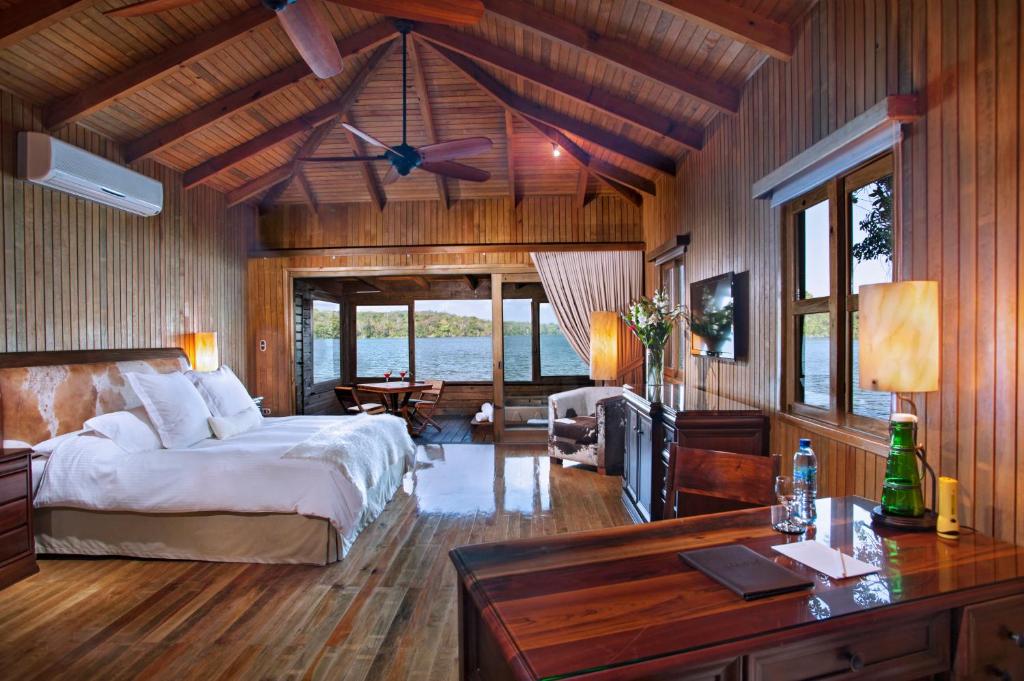
Las Lagunas Boutique
📍 Cabins, Flores
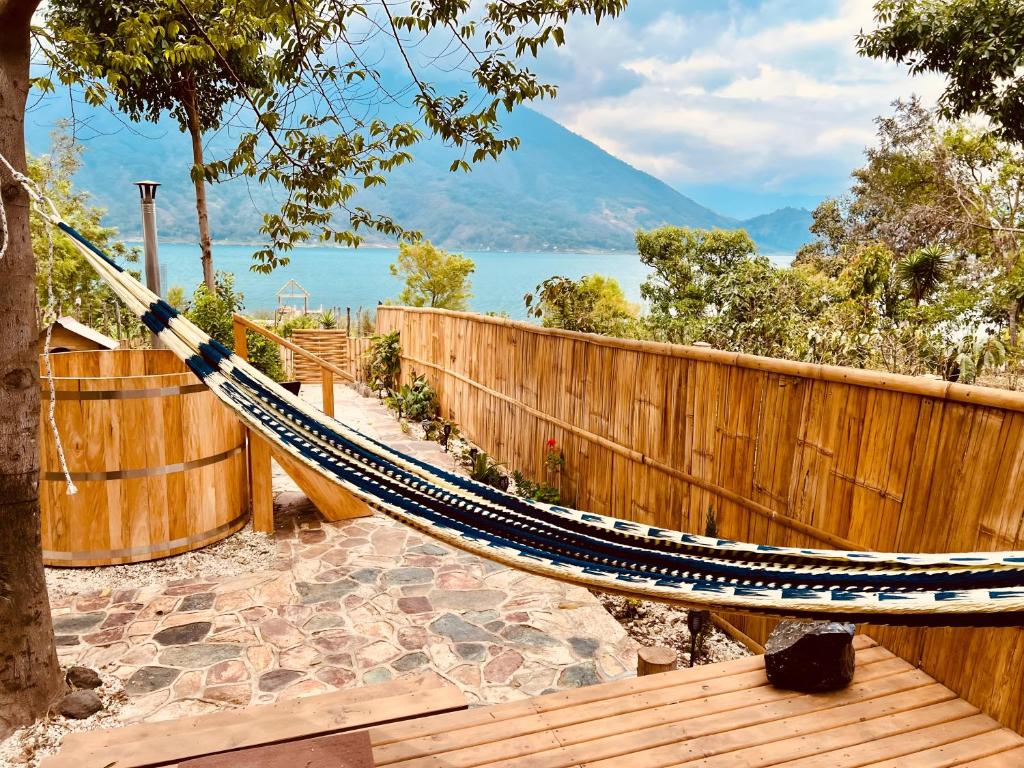
Luxe A-Frame on Lake Atitlán
📍 Cabin, Santiago Atitlan
Nature trips
Open-sea fishing, mangrove tours, and sea turtle spotting, there are loads of options at El Paredon tours. They have a big focus on supporting the local community and economy, too, so you know your money is going to good use.
Accommodation:
- Cheap: Driftwood Surfer Beach Hostel, $11 ish per night for a dorm.
- Mid: Mellow Hostel, $20 ish per night for a dorm (a private might work out cheaper if there are two of you).
- Luxury: You can get a nice Airbnb with your own toilet (!!) for around $100 per night.
Part 2: North/The Caribbean side
Semuc Champey – 3 Days
Semuc Champey is a little bit out of the way, but totally worth the journey. It’s easily one of the most beautiful places I’ve been. You just have to put a bit of work in to get there.
We caught a transfer from El Paredon to Antigua, then another to get to Semuc. It took around 12 hours and was one of those travelling days that makes you wonder why you’re doing this whole backpacking thing.
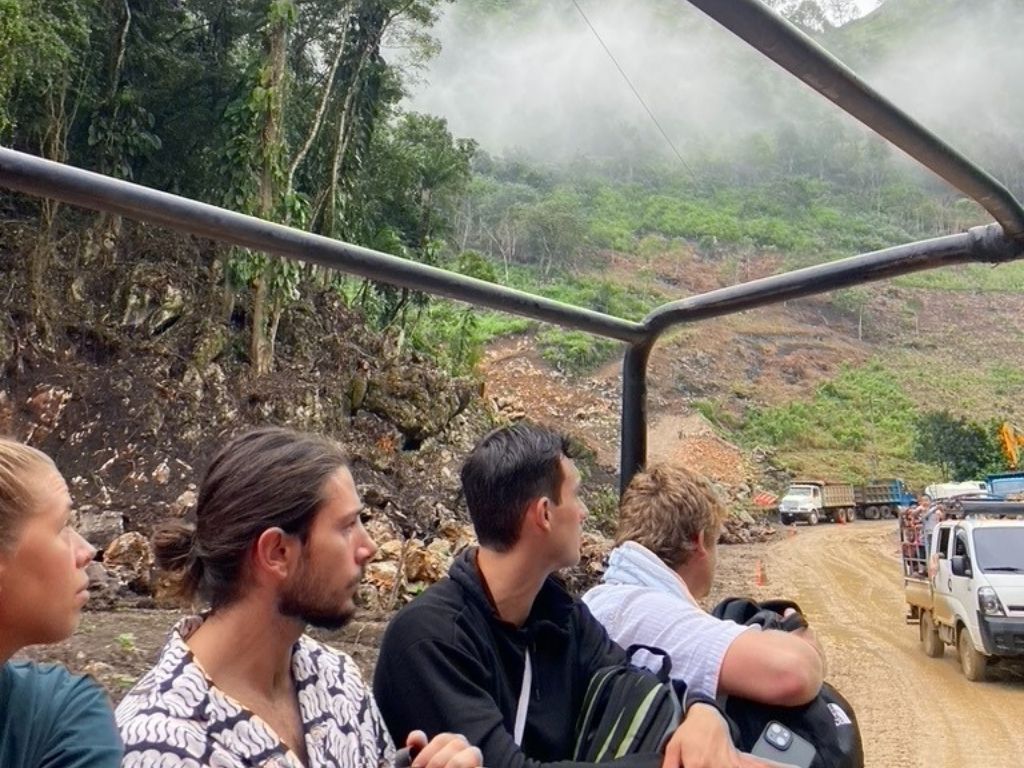
Eventually, you will get dropped in Lanquin. Depending on where you’re staying, your hostel should send a truck to pick you up. Then you get to go off-road through the jungle.
Things to do
- Caving & tubing: Definitely a must! You trek through the caves using only candlelight. There’s an internal water fountain at the end of the cave, which you can jump down, then you head back out into the freezing river to go tubing. Make sure you take a dry bag and some cash, as the locals will jump in their own tubes and come paddling after you to sell you beers.
- Quad biking: We hired quad bikes from our hostel and went off-roading around the area. There’s not really much to see, just jungle for miles and miles, and lots of small communities with kids that run out of their houses to wave. We grabbed a bunch of sweets to hand out to the children as we drove past.
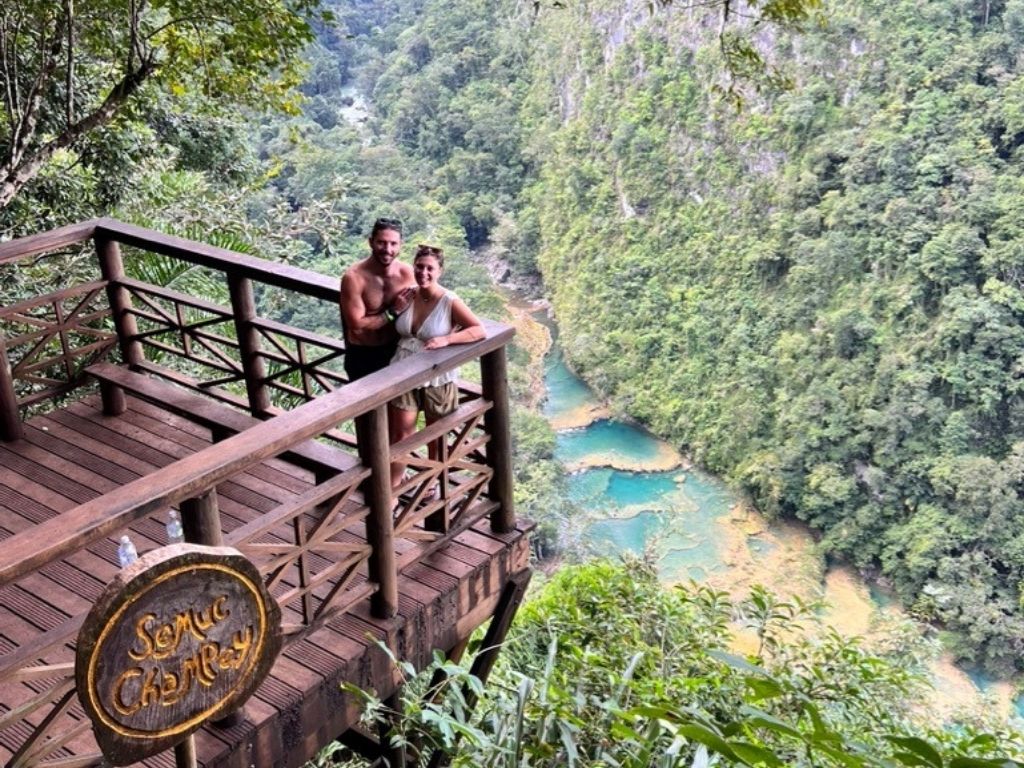
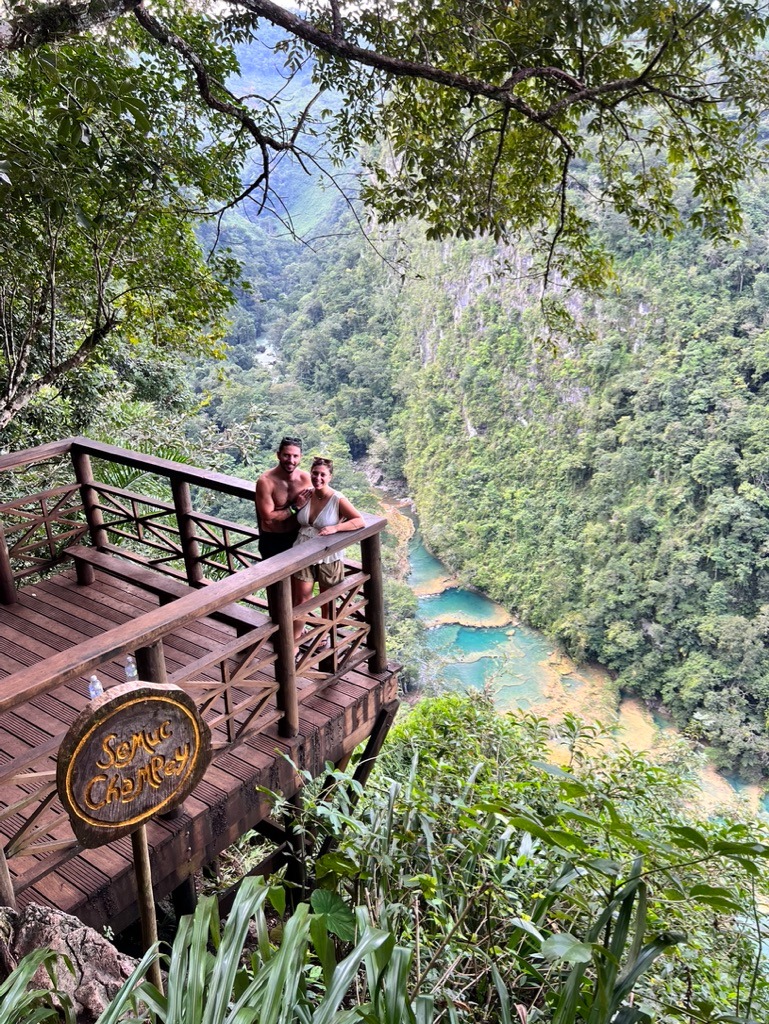
- Semuc Champey: Semuc Champey is the name of the attraction everyone heads here to visit. It’s a series of limestone bridges and natural pools, which are incredible to swim in. There’s a hidden hike that not many people make the effort to do, but you get great views across the river and the reward of going down for a cold dip after getting a sweat on.
Accommodation
You’re not getting a cheap, mid and luxury as there aren’t enough options!
There are around three hostels in the area. We stayed at Greengo’s and really enjoyed it. Dorms are around $20, and food is a little steep, but once you’re at your hostel, you can’t really get anywhere. So you need to stay somewhere good.
Rio Dulce & Livingston – 3 Days
Rio Dulce and Livingston are the next stops to tag onto Semuc Champey. It’s only around another… 5 hours drive.
Rio Dulce and Livingston are great places to go if you’re looking for more of that ‘off the beaten path’ travelling. The villages are pretty remote and a lot harder to reach than the spots I’ve mentioned so far. The area is full of steamy jungle, limestone cliffs rising above the river, and off-grid lodges that are only accessible by boat.
Things to do
- Visit Livingston: Another town around 1.5 hours away from Rio Dulce. Livingston is a super interesting place to visit as it is home to Guatemala’s only Black community, the Garifuna people. The area has that Caribbean feel, with reggae music playing at every bar and Caribbean dishes that you won’t find anywhere else in the country. There’s not a huge amount to do when you get there, so just sit back and enjoy the vibes.
- The Quiriguá ruins: I haven’t touched on much Guatemalan history yet, so it was about time we talked about some Mayan ruins. Quiriguá is a UNESCO World Heritage site, around 1.5 hours from Rio Dulce town. Way back in 500 AD, this was one of the most important Maya cities in the area.
- Scenic river boat trips: For nature lovers, a scenic river boat tour is a must. Depending on which tour you do, you’ll see everything from waterfalls and hot springs to pelican communities and riverside beaches.
Accommodation:
- Cheap: Hotel Backpackers Rio Dulce, $8 per night for an 8-bed dorm.
- Mid: Boatique Hotel & Marina, $20 per night for a 4-bed dorm.
- Luxury: Stay in a jungle cabin complete with a palapa roof for around $130 per night.
Flores & Tikal – 4 Days
Time for the last stop on this itinerary. Most people head here for one big reason: to visit the ancient temples of Tikal. Tikal is to Guatemala what Siem Reap is to Cambodia. So it should definitely be on your list.
Lots of people blow in and straight out, just to visit the temples, but there’s actually a lot more to see in Flores than you might first think. Flores is the second-oldest continuously inhabited city in the Americas, so it’s steeped in history. It was also the very last Maya city to fall to the Spanish invasion in the 1500s.
Things to do
- Tikal ruins: Starting strong, the ruins are an essential. There are tours throughout the day, but sunrise and sunset are always best (though you have to pay extra for these). You can also get a bus and explore it yourself, but the ruins are so big you run the risk of getting lost (and also having no idea what you’re looking at). Entrance fees are around $20, and the guided tour is another $13 on top.
- Crater Azul: Not actually a crater, just a really blue part of the river Arroyo El Pucté. It’s a great place to cool off in the jungle, with almost no one else around apart from a few locals if you visit on the weekend.
- Ixpanpajul National Park: Vibrant jungle teeming with wildlife, you can enjoy ziplines, suspension bridges, and camping. The skyhighway experience is 2 hours of platforms, ziplines and cables amongst the trees, for only $30!
Accommodation:
- Cheap: Adra Hostel is just under $15 for a 12-bed mixed dorm.
- Mid: Los Amigos is a little bit fancier with better facilities, for around $30 a night for a 6-bed dorm.
- Luxury: Get your own apartment with a small kitchen for $50 a night.
Quick Note on Guatemala City
As I mentioned earlier, lots of people stay away from the city because of safety concerns. We did the same. We stayed there just for one night, before an early morning flight. We were in a gated estate with security guards, and didn’t leave the apartment all night, and still got a little bit sketched out. Choose your accommodation wisely!
Extra pre-trip info on Guatemala
I think I’ve covered a lot of the essentials on what to think about before doing a 3 week trip around Guatemala, but for that extra level of detail, I’ve put this section together for you.
Travel budget for 3 weeks in Guatemala
Activities will eat into most of your budget, but the day-to-day living in Guatemala is pretty cheap. Some of the information below was collated from a range of open source data providers, such as pricing averages on Hostelworld.com, Viator, 12go, Booking, and public data from Budgetyourtrip.com.
Whenever I personally budget for backpacking trips, I never really take activities into account. These are extras for me! So, for just the basics you need to get by, food, accommodation, a few beers, $40-$60 per day is a safe budget. Just being in Guatemala is enough activity for many!
Food
For a proper meal in a restaurant, you can expect to pay $7-$10. But, if you’re happy to eat street food and at more local (non-touristy) restaurants, you’re going to be paying half of that. If you want beers too, you can expect to pay around $3.
Accommodation
Per night, you’re looking at $10-$20 in a hostel, depending on how fancy your tastes are. Or, because there were two of us anyway, we stayed in a few average but private Airbnbs for around $30 per night. If you want something fancier, you can find 3* hotels for around $80 per night.
It’s worth noting that prices will vary hugely depending on what time of year you visit. Dry season is the best for a reason, but that also means you’ll pay a premium. Christmas and New Year’s are especially expensive, as is Santa Semana (which is Central America’s Easter).
Activities & Transport
I already touched on the price for transport; a 3-hour journey will set you back about $20. I’ll go into more detail about specific journey prices in the itinerary itself.
Another thing to budget for is activities. Of all the countries I’ve visited in Central America, Guatemala was my favourite for activities. Because the country and climate are so vast, there are so many different things to see and do. But that does add up. More on that in the itinerary, too.
 Accommodation
From $10–$30 per night (£8–£22)
Accommodation
From $10–$30 per night (£8–£22)
 Food & Drink
From $12–$15 per day (£10–£15)
Food & Drink
From $12–$15 per day (£10–£15)
 Transport
Approx $20 for 3 hour distance (£16)
Transport
Approx $20 for 3 hour distance (£16)
Guatemala 3 Week Trip Cost Calculations
Will my budget stretch? If you need to work out if your planned budget for spending 3 weeks around Guatemala will last the distance, try our trip cost calculator linked below. This will cover you for a 3 week roadtrip or overland bus trip, the numbers are faily similar.
What numbers to use? Use the numbers above, as these are based on backpacking on a budget to a solo traveller doing it in style. The rate for transport per day was what I averaged travelling between locations in Guatemala.
BUDGETING: 3 Week Trip Cost CalculatorSo, should I spend 21 days in Guatemala?
100%. You could easily stretch this out more, either by adding on more stops or adding more leisure days to the plan above.
Of all the countries we visited on our 5-month trip around Central America, Guatemala was definitely the one that surprised me the most. From dramatic, live volcanoes to rich Mayan history, dense jungle, and both Pacific and Caribbean coastlines, it’s such a diverse place to explore.
Have a great trip and tag us in your stories! @threeweektraveller
Click the enlarge button on the top right corner. Credit: map data: Google
NEXT UP: 3 Weeks in Mexico